
Description
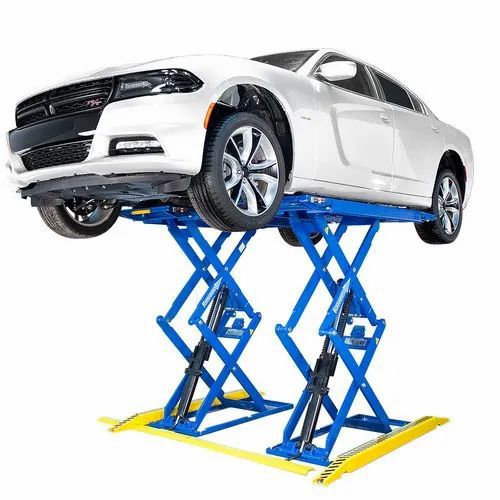
A low-profile, low-rise hydraulic scissor lift with an exceptionally thin platform height (often 3-4 inches / 75-100 mm when collapsed). Designed for quick vehicle elevation to a comfortable chest or waist height for undercarriage access, tire services, and quick inspections.
How It Works
It uses a compact scissor mechanism and short-stroke hydraulic cylinders. The vehicle is driven or pushed onto the low platform, and the lift raises it straight up. It does not lift to full overhead height like a two-post lift.
Key Specifications & Design
Collapsed Height: Ultra-thin, typically 3″ to 4″ (75-100mm). Allows most low-slung sports cars to clear it easily.
Lift Height: A “mid-rise” lift, usually raising the vehicle 36 to 60 inches (0.9 – 1.5 meters) off the ground—enough to work comfortably while standing or on a stool.
Capacity: Common capacities are 6,000 to 7,000 lbs.
Power: Usually 110V/220V single-phase electric hydraulic power unit. Some are portable with wheels.
Actuation: Often includes a removable hand pump or foot pedal for manual operation, or a small electric pump.
Safety: May have integrated mechanical locks or require supplementary jack stands for safe prolonged work.
Primary Advantages & Uses
Access for Ultra-Low Cars: The #1 benefit. Can lift cars that cannot clear the ramps of a standard two-post lift.
Space-Efficient: Requires minimal space, can be stored against a wall, and leaves the ceiling clear.
Quick Service Ideal: Perfect for tire rotations, brake jobs, oil changes, and inspections where full overhead height isn’t needed.
Portability: Many models are on wheels and can be moved around the shop.
Low Cost & Easy Installation: No permanent installation or major concrete work required compared to larger lifts.
Critical Safety & Operational Rules
It is a LIFT, NOT a permanent SUPPORT: NEVER get under a vehicle supported only by an ultra-thin scissor lift. Once raised, you MUST place rated jack stands under the vehicle’s solid lift points before working underneath. The lift’s hydraulics can fail.
Use on a Perfectly Level, Solid Floor: Concrete is mandatory. Any slope or soft surface can cause tipping.
Center the Load: Ensure the vehicle’s tires are centered on the platform pads. An off-center load is unstable.
Do Not Exceed Capacity: Includes vehicle weight plus the technician’s force during work (e.g., pulling on a breaker bar).
Engage Locks if Equipped: If the lift has mechanical lock positions, use them. If it doesn’t, the requirement for jack stands is even more critical.
Check for Clearance Before Lowering: Ensure no tools, stands, or body parts are under the platform or scissor arms before lowering.
Inspect Regularly: Check hydraulic lines and fittings for leaks. Ensure the scissor arms pivot points are clean and lubricated.
Bottom Line
An ultra-thin scissor lift is an incredibly useful and space-saving tool for quick service and low-clearance vehicles. Its primary role is to raise the vehicle to a convenient height, not to serve as the sole safety support for underneath work. Its thin profile solves access problems, but its safe use is 100% dependent on the supplementary use of jack stands. It is a popular choice for quick-lube shops, tire shops, and detailers, but it must be used with disciplined safety habits.


Reviews
There are no reviews yet.