
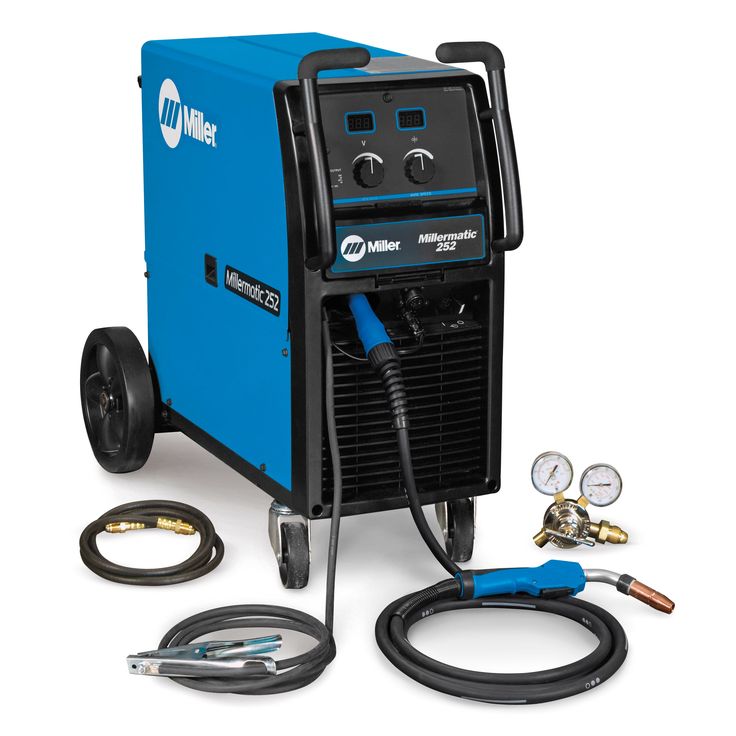
Description
A device that generates the electrical power (or gas) required to permanently join metals together by melting and fusing them, with or without a filler material.
How It Works
It creates an electrical circuit between the machine, an electrode, and the metal workpiece. When the electrode is brought close to the workpiece, the circuit is completed through an electric arc—an intensely hot, concentrated plasma stream that melts the metal at the joint, forming a weld pool that solidifies into a strong bond.
Main Types & Processes
MIG Welder (GMAW): Uses a continuously-fed, consumable wire electrode and a shielding gas (e.g., Argon/CO2 mix). Most common in automotive/body shops. Fast, versatile, and relatively easy to learn for steel and aluminum.
Stick Welder (SMAW): Uses a consumable, flux-coated rod electrode. Simple, portable, and works outdoors or on dirty metal, but requires more skill and produces more spatter.
TIG Welder (GTAW): Uses a non-consumable tungsten electrode and a separate filler rod, with pure argon shielding gas. Offers extreme precision and control for thin metals, aluminum, stainless steel, and high-quality fabrication. Requires significant skill.
Flux-Cored Welder (FCAW): Similar to MIG but uses a special tubular wire with internal flux, often without external gas. Great for thick materials and outdoor/drafty conditions.
Key Components
Power Source: Transforms input power (e.g., 120V/240V) into the correct voltage and amperage for welding.
Torch/Gun (MIG/TIG) or Electrode Holder (Stick): The tool the operator holds.
Ground Clamp: Completes the electrical circuit by clamping to the workpiece.
Wire Feeder (MIG): Drives the consumable wire.
Shielding Gas Cylinder & Regulator (MIG/TIG): Provides the protective atmosphere.
Primary Shop Uses
Fabrication & Repair: Building frames, brackets, exhausts, roll cages.
Auto Body Repair: Panel replacement, patch welding, frame straightening.
General Maintenance & Manufacturing.
Critical Safety Rules (Non-Negotiable)
Eye Protection is #1: Never weld without a proper auto-darkening welding helmet (or fixed shade lens) rated for the amperage. Arc flash causes instant, severe eye damage.
Protect from Fumes: Weld in a well-ventilated area or use a fume extraction system. Inhaling welding fumes is a serious health hazard.
Wear Protective Clothing: Fire-resistant (FR) jacket or sleeves, welding gloves, and closed-toe leather boots to protect from sparks, UV radiation, and molten metal.
Check Your Ground: The work clamp must be attached securely to clean, bare metal close to the weld area. A poor ground causes erratic arcs and can create shock/fire hazards.
Clear the Area of Flammables: Sparks can travel 30+ feet. Remove all paper, rags, solvents, and flammable liquids from the area.
Beware of Electrical Shock: Keep yourself and the equipment dry. Do not touch the electrode/rod with bare skin while the machine is on.
Understand Your Material: Know what metal you are welding (mild steel, aluminum, etc.) and use the correct process, settings, filler, and gas.
Bottom Line
A welding machine is a fundamental fabrication and repair tool that requires a blend of technical knowledge, practical skill, and rigorous safety discipline. Choosing the right process (often MIG for general shop work) and mastering its basics is key. Safety is not optional—proper PPE, ventilation, and fire prevention are absolute necessities to prevent permanent injury or disaster.
Reviews
There are no reviews yet.