
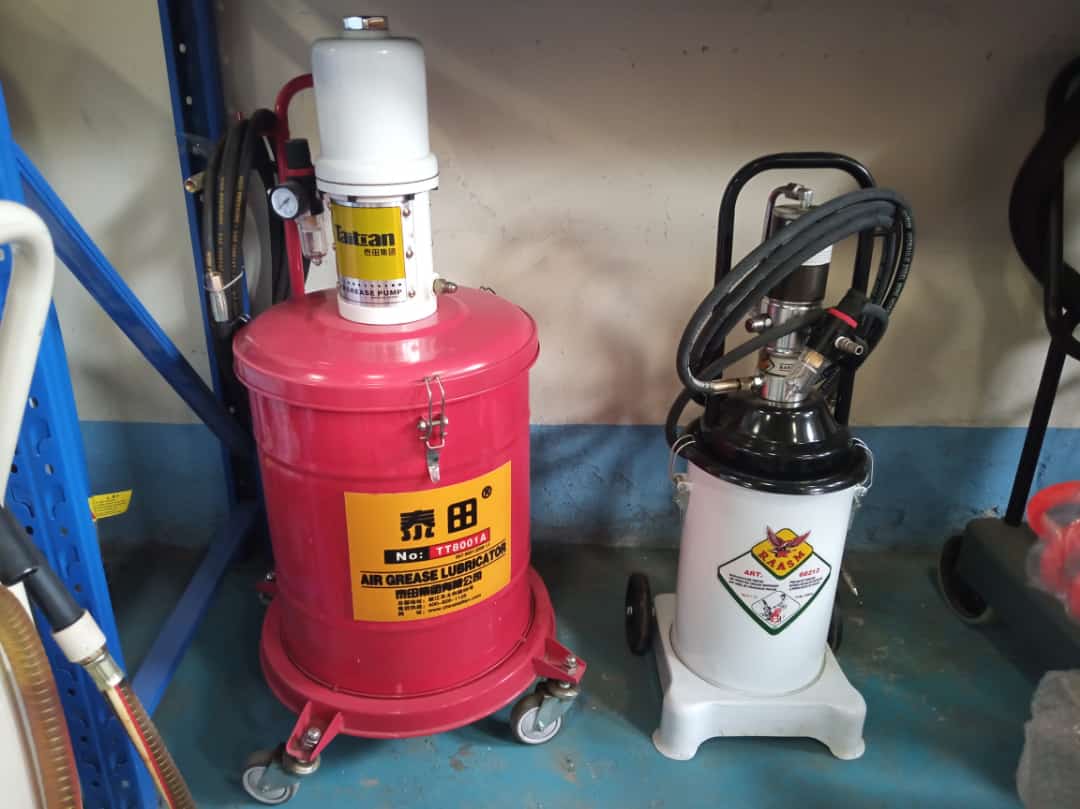
Description
A portable, hand-powered tool used to apply lubricating grease through a nipple (zerk fitting) to bearings, joints, and other friction points on vehicles, machinery, and equipment.
How It Works
The user manually pumps a lever or handle. This action builds hydraulic pressure inside the gun, forcing grease from a storage cartridge or chamber through a flexible hose and out a coupler tip that locks onto the grease fitting.
Main Types by Loading
Cartridge/Lever Gun: Most common. Uses standard 14.5oz grease cartridges. Loads easily and keeps grease clean.
Bulk Load/Piston Gun: Filled from a bulk grease tub. Higher capacity but messier to refill.
Mini/Hand-Push Gun: Small, direct-pressure gun for small, precise jobs or tight spaces.
Key Components
Body & Pump Mechanism: Lever, piston, and pressure chamber.
Grease Cartridge Tube (or bulk chamber).
Flexible Hose: For maneuverability.
Coupler Tip: The end that locks onto the grease fitting (zerk). Types include standard, locking, and needle-nose for different fittings.
Primary Purpose
To perform preventive maintenance lubrication on all greasable components to reduce wear, prevent rust, and ensure smooth operation.
Critical Points of Service (Common on Vehicles)
Ball Joints & Tie Rod Ends (suspension).
Universal Joints (U-Joints) on drive shafts.
King Pins on heavy truck axles.
Wheel Bearings (on older vehicles with serviceable bearings).
Pivot Points on construction/agricultural equipment.
Critical User Rules
Clean the Fitting First: Always wipe dirt and grit off the grease nipple with a rag before attaching the coupler. Pushing dirt into the joint causes abrasive wear.
Secure the Coupler: Push the coupler firmly onto the fitting until it clicks or seats fully. A partial connection will spray grease and not fill the component.
Pump Until Resistance is Felt: Pump the lever slowly until you see the rubber boot swell slightly or feel firm pressure resistance. Stop immediately to avoid blowing out the seal.
Watch for Seal Failure: If grease immediately oozes out from around the seal or boot, the seal is damaged and the component needs service.
Use the Correct Grease: Match the grease type (e.g., Lithium Complex, Moly) to the manufacturer’s specification. Do not mix incompatible greases.
Purge Air After Loading: After loading a new cartridge, pump the gun (with the coupler off) until a solid stream of grease appears to remove air pockets.
Store Properly: Wipe the coupler clean and store the gun in a dust-free place. Hang it with the coupler end down to prevent air from entering the hose.
Bottom Line
A manual grease gun is a fundamental and indispensable maintenance tool. Proper lubrication is the easiest way to extend the life of mechanical components. The key to effective greasing is cleanliness, using the correct grease, and knowing when to stop to prevent damage. It is a simple tool that, when used correctly, prevents costly repairs.

Reviews
There are no reviews yet.