
Description
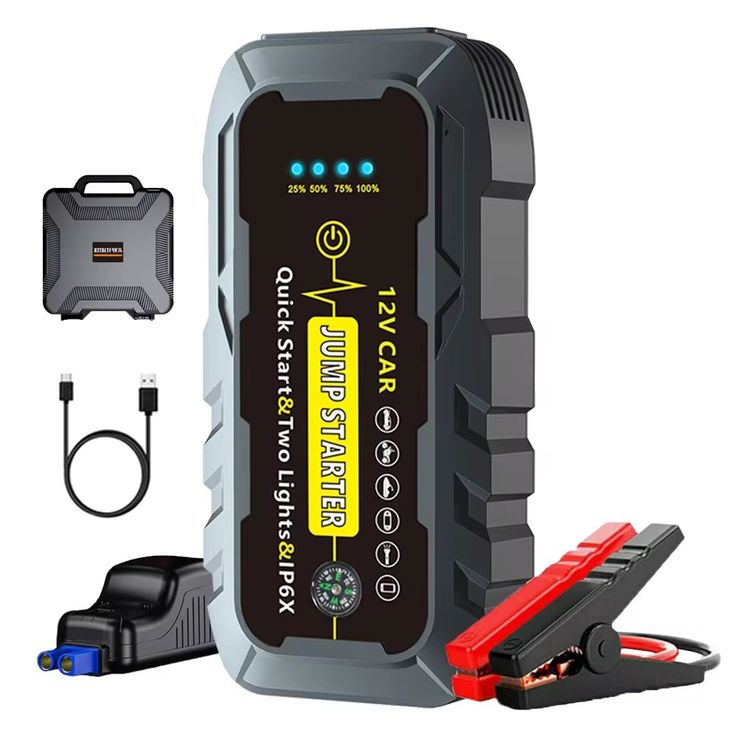
A portable power bank with heavy-duty cables/clamps, designed to provide a high-current burst to start a vehicle with a dead or weak battery, without needing a second running vehicle for a jump start.
How It Works
It uses an internal, high-capacity lithium-ion (or lead-acid) battery to deliver cranking amps (CA) or peak amps (PA) directly to the vehicle’s dead battery via clamps, providing the necessary power to turn the starter motor.
Key Types
Lithium-Ion Compact Packs: Modern standard. Very portable, often include USB charging ports and emergency lights.
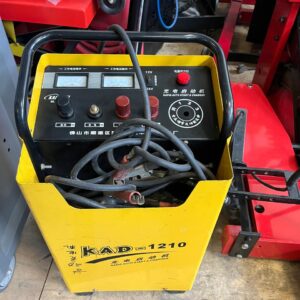
Lead-Acid Booster Packs: Older, heavier, bulkier, but can have high amperage.
Portable Power Stations: Larger units with AC outlets, designed for jumping plus running other equipment.
Main Features
Peak/Starting Amps: Critical rating (e.g., 1000A, 2000A). Must be high enough for your engine size.
Safety Protections: Essential features like reverse polarity alarm, spark-proof tech, and over-current protection.
Additional Functions: Built-in flashlight, USB charging ports, air compressor, or 12V accessory outlet.
Clamps: Should be heavy-duty, with strong springs and thick gauge wire.
Primary Uses
Emergency Self-Jump Starting: Core function for cars, trucks, motorcycles, boats.
Portable 12V & USB Power Source: Can charge phones, tablets, or power small 12V devices.
Emergency Light & Power Backup: Useful in roadside or camping situations.
Critical Safety & Operating Rules
READ THE MANUAL FIRST: Procedures can vary. Follow the specific device instructions.
Connect in Correct Order:
1. Positive (+) on Jumper → Positive (+) on Dead Battery.
2. Negative (-) on Jumper → Clean, unpainted metal ground on the dead car’s engine block or frame (NOT the dead battery’s negative terminal).
Check Polarity: Most units will sound a loud alarm if clamps are reversed. Do not proceed if alarm sounds. Immediately disconnect.
Do Not Crank Excessively: Attempt a normal 3-5 second start. If it fails, wait 30-60 seconds before retrying. Repeated failed attempts can damage the unit.
Disconnect Immediately After Start: Once the engine is running, disconnect the clamps in reverse order (remove ground first, then positive).
Recharge After Use: Recharge the unit fully after every use so it’s ready for the next emergency.
Bottom Line
A modern car jumper charger is an essential piece of emergency gear for any vehicle. It provides complete independence from needing another car for a jump. Success and safety depend on choosing a unit with sufficient peak amps for your vehicle and strictly following the safe connection procedure.


Reviews
There are no reviews yet.