
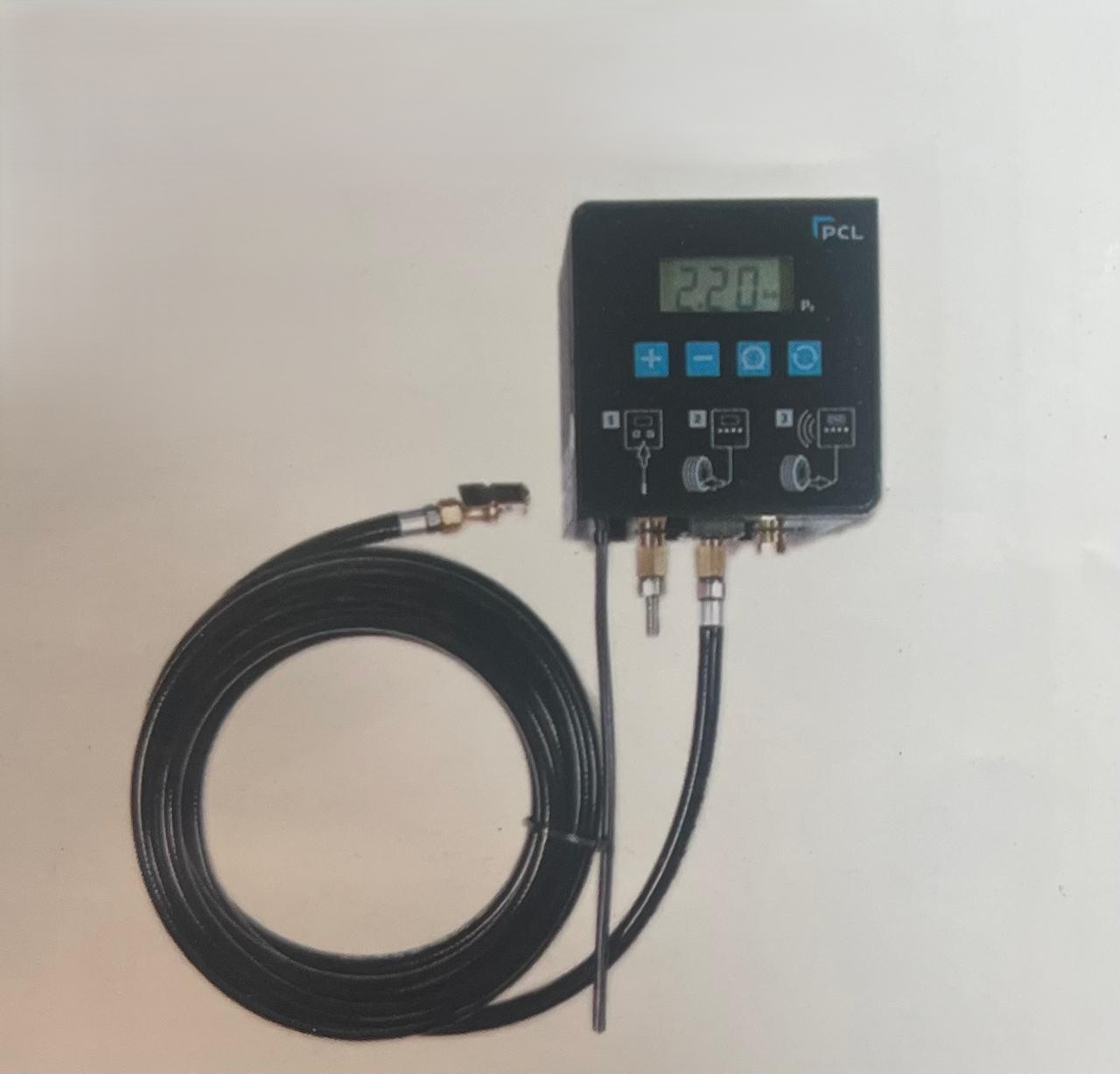
Description
A handheld or mounted tool used to measure the air pressure inside a vehicle’s tires, expressed in PSI (pounds per square inch) or Bar. It is a fundamental tool for safety, performance, and fuel economy.
How It Works
A plunger or sensor inside the gauge is actuated when pressed onto the tire’s valve stem. The air pressure moves a calibrated dial (analog) or is read by an electronic sensor (digital), giving a precise reading.
Key Types
Stick/Pencil Gauge: Simple, inexpensive, with a graduated stick that pops out.
Analog Dial Gauge: Features a round dial with a needle. Generally more accurate and durable than stick types.
Digital Gauge: Provides an electronic LCD readout. Often the most precise and easy to read, with backlighting.
Inflator Gauge (with Bleeder Valve): Often a dial gauge integrated into an air chuck, allowing you to measure and adjust pressure without removing the tool.
Primary Uses
Routine Tire Pressure Checks: Mandatory for safe driving and even tire wear.
Pre-Trip Inspection: Critical for RVs, trailers, and loaded vehicles.
Performance Tuning: Adjusting pressure for racing, autocross, or specific handling characteristics.
Diagnosing Slow Leaks: Identifying a tire that loses pressure over time.
Critical User Tips
Check When Tires Are Cold: Tire pressure increases as tires heat up from driving. For an accurate baseline reading, check before driving or after the vehicle has sat for several hours.
Use a Quality Gauge: Cheap gauges are often inaccurate. Invest in a reliable dial or digital gauge and periodically verify its accuracy.
Firm Seal on Valve Stem: Press the gauge onto the valve stem firmly and squarely to get a proper seal and prevent air hiss, which can cause a false low reading.
Know Your Specs: The correct pressure is found on the vehicle’s tire placard (usually on the driver’s door jamb), not the maximum pressure listed on the tire sidewall.
Check All Tires & Spare: Don’t forget the spare tire.
Bottom Line
An accurate air gauge is a non-negotiable basic tool for every driver and technician. Proper tire inflation is the single easiest and most effective maintenance task for ensuring safety, maximizing tire life, and optimizing fuel efficiency. Using a reliable gauge is the first step.

Reviews
There are no reviews yet.