
Description
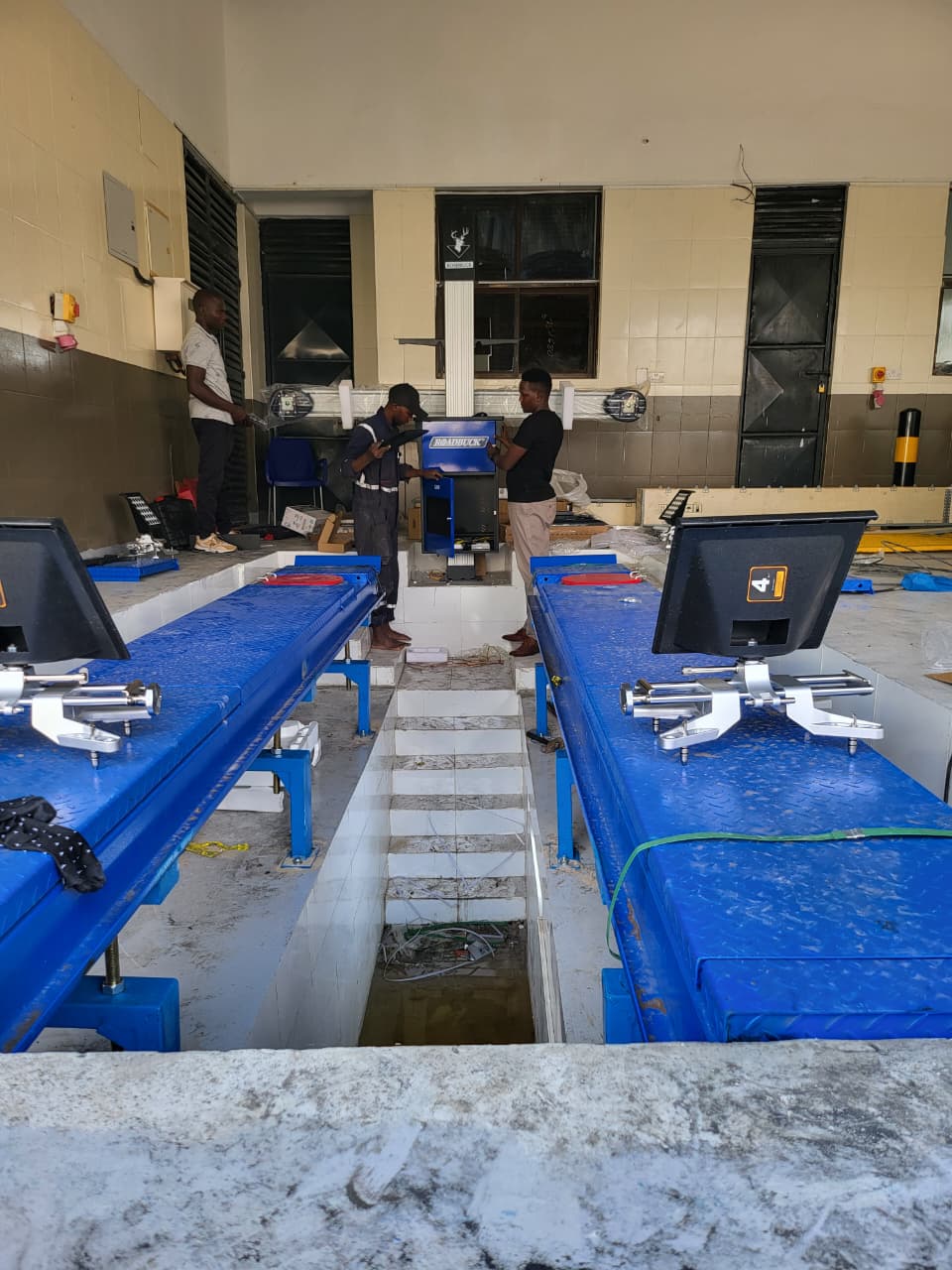
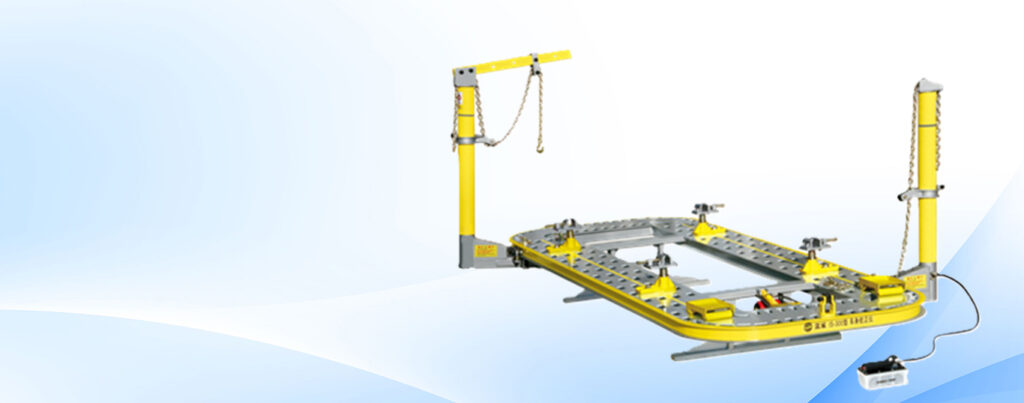
A vehicle frame measuring and straightening system where the main structure—including the anchoring platform and vertical pull towers (legs)—is installed on top of the workshop floor, often over a shallow pit or recessed area for the platform. The “legs” are the heavy vertical towers used for anchoring pull chains.
How It Works
The vehicle is driven onto the rack’s main platform and anchored. Vertical pull towers (the legs) are positioned around the vehicle on the shop floor. Chains from hydraulic rams on these towers are attached to the vehicle to apply corrective force. A separate 3D measuring system (lasers/cameras) is used to monitor the straightening process against factory specifications.
Key Design Features
Surface Mount Installation: The main platform is either flush with the floor (in a very shallow pit) or slightly raised. The pull towers are free-standing and movable on the floor around it.
Modular Pull Towers (Legs): These are the defining feature. Heavy, portable columns that can be placed anywhere needed for multi-directional pulls.
Integrated or Separate Measuring: Uses a sophisticated 3D electronic measuring system.
Platform Anchoring: The platform contains fixed or adjustable anchor points to secure the vehicle.
Primary Advantages
Flexibility in Pulling: The movable towers allow for complex, multi-angle pulls from virtually any direction, which is essential for severe or complicated collision damage.
Easier Access for Measurement: Technicians have clear, walk-around access to the vehicle and measuring targets.
No Deep Pit Required: Avoids the major excavation, drainage, and safety issues of a deep pit. Installation is less invasive.
Potential for Higher Capacity: The robust, above-ground design can often be rated for heavier vehicles.
Critical Applications
Medium to Severe Collision Repair: The go-to system for complex structural damage.
Heavy Truck & Frame Shops: Where vehicle size and damage severity require powerful, versatile pulling.
Restoration Shops: For correcting significant misalignment on older frames.
Critical Safety & Operational Rules
Secure the Vehicle AND the Towers: Double-anchoring is critical. The vehicle must be anchored to the platform, and the pull towers themselves must be securely bolted to the floor or to dedicated anchor points to prevent them from tipping under load.
Calculate Pull Angles & Loads: Improper chain angles can generate dangerous side-loads on the towers. Use the system’s guides to set up pulls within safe parameters.
Inspect Chains & Attachments Daily: Check pull chains, hooks, and anchor clamps for wear, cracks, or deformation before every use. A failed chain under tension is lethal.
Use a Spotter & Clear the Zone: The “line of fire” in front of a pull must be completely clear. Use a spotter to watch the vehicle and equipment during the pull.
Measure, Pull, Re-Measure: Follow the disciplined cycle: 3D measurement to plan the pull, apply force in small increments, stop and re-measure. Never guess.
Platform & Floor Integrity: Ensure the platform and the floor where the towers are anchored are of sufficient strength and perfectly level.
Operator Training: Requires specific training on tower setup, load management, and the specific measuring software.
Bottom Line
A pit rack with legs (above-ground rack with towers) is the industry standard for versatility and power in structural repair. Its movable towers provide unmatched pulling capability for complex jobs. However, this power comes with increased setup complexity and significant safety responsibilities—primarily ensuring both the vehicle and the pull towers are immovably anchored. It is a system for professional, trained technicians in a dedicated frame repair bay.

Reviews
There are no reviews yet.