
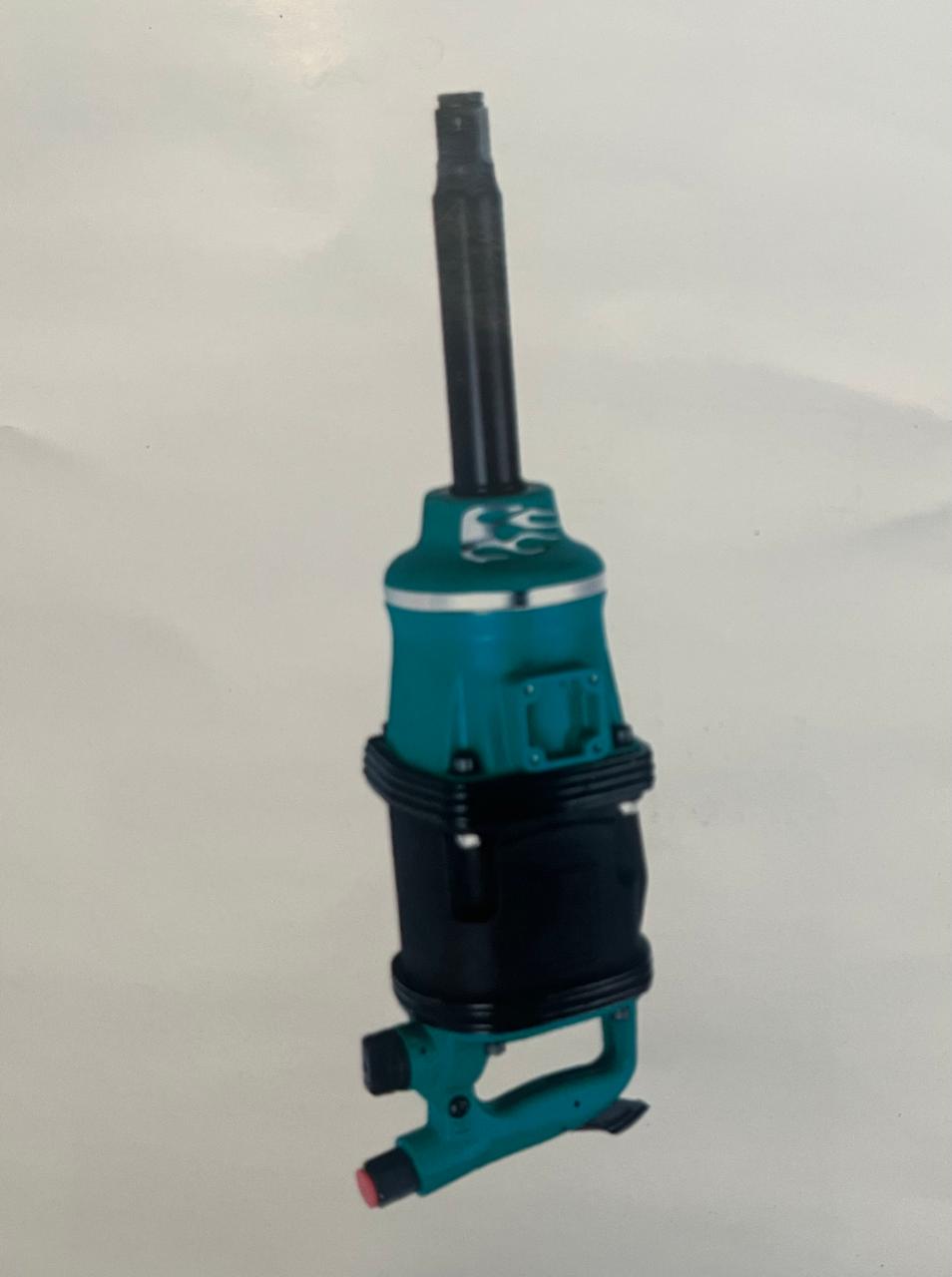
Description
A heavy-duty pneumatic (air-powered) tool that delivers high-torque, rapid impacts to tighten or loosen stubborn nuts and bolts. The ½” refers to the square drive size of its output anvil, indicating its power class.
How It Works
Compressed air spins a hammer mechanism inside the tool. This hammer delivers a series of powerful, short bursts (impacts) to the anvil, translating into rotational force (torque) to break fasteners free or drive them tight.
Key Specs & Types
Drive Size: ½” is the most common shop size, balancing power and versatility. Uses ½” drive sockets.
Torque: Power is measured in ft-lbs (or Nm). Ranges from ~200 ft-lbs for compact models to 1000+ ft-lbs for high-torque models.
Size/Shape:
Standard: General-purpose workhorse.
Compact/Extended Anvil: For tighter spaces.
Forward/Reverse & Variable Speed: Trigger-controlled; pull for forward, push for reverse. Pressure-sensitive speed control.
Primary Shop Uses
Wheel Removal/Installation: Primary use—quickly removing lug nuts.
Suspension & Drivetrain Work: Loosening large, seized bolts on control arms, axles, etc.
General High-Torque Tasks: Any job where a standard ratchet is too slow or lacks power.
Critical User Rules
Air Supply is Key: Requires high air volume (CFM) and clean, regulated air (~90 PSI). Undersized compressors will not run it effectively.
Use Impact-Rated Sockets Only: Standard chrome sockets can shatter under impact. Use only black impact sockets.
Always Finish by Hand (Tightening): Never use an impact wrench for final tightening of critical fasteners (e.g., lug nuts, engine bolts). Always use a torque wrench to achieve the specified torque.
Correct Socket Attachment: Ensure the socket is fully seated on the anvil and secured with a pin retainer. Check for wear on both.
Daily Maintenance: Add 3-5 drops of pneumatic tool oil into the air inlet daily before connecting it.
Bottom Line
A ½” air wrench is the essential workhorse for speed and power in an automotive or industrial shop. It dramatically reduces labor time on heavy disassembly. However, it is a “breaker” and “runner,” not a precision tool. Final torque must always be set with a calibrated torque wrench for safety and proper clamping force.



Reviews
There are no reviews yet.