
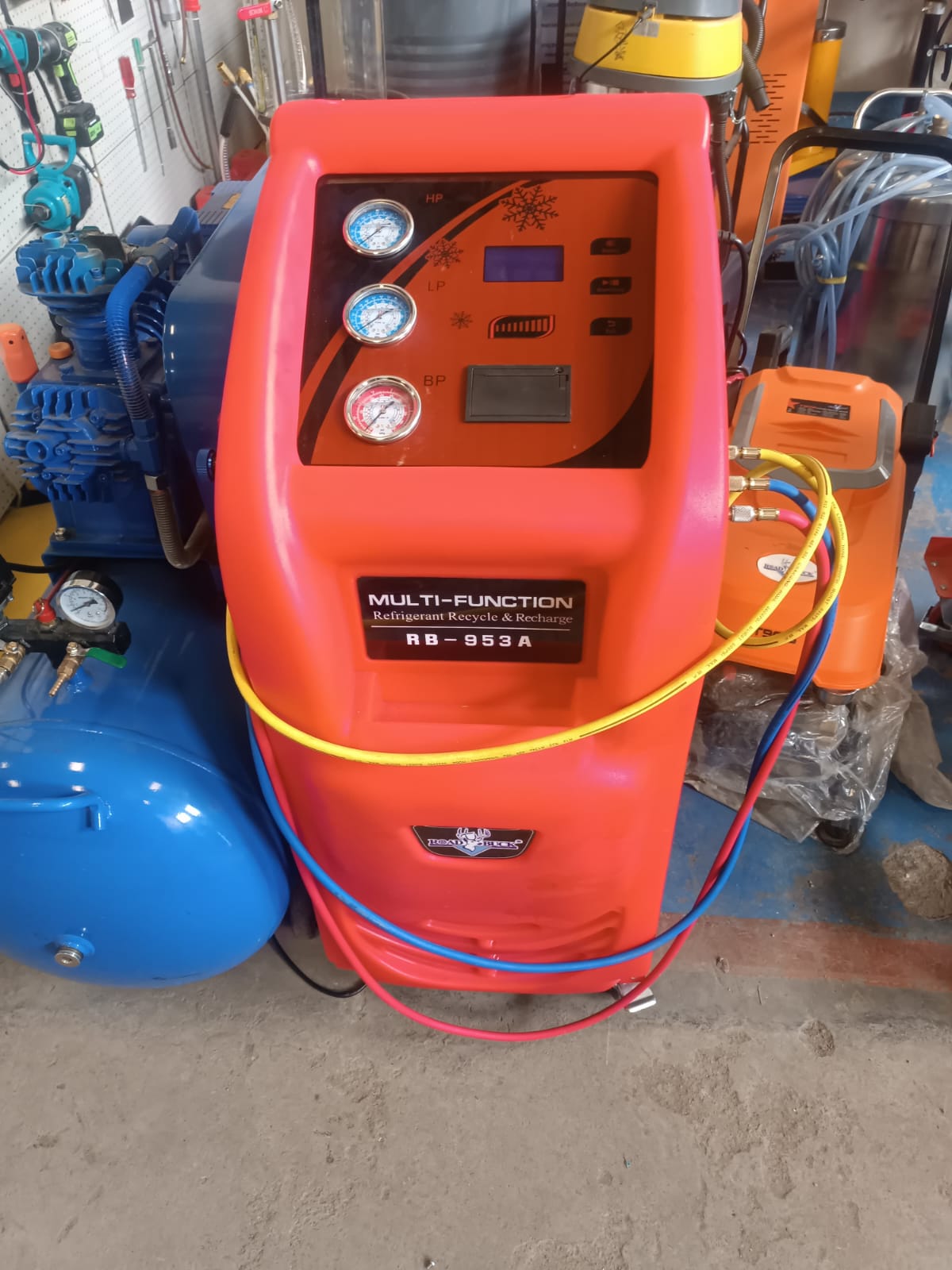
Description
A fully integrated, computerized machine that automates the entire process of servicing a vehicle’s air conditioning system. It performs recovery, recycling, evacuation, and recharge in one automated cycle with minimal operator input.
How It Works
The operator connects the machine’s hoses (high side, low side) to the vehicle, enters the vehicle specs or refrigerant type/weight via a touchscreen, and presses start. The machine then:
Recovers all old refrigerant and oil from the vehicle into its internal tank.
Recycles the recovered refrigerant by filtering and cleaning it to SAE standards.
Evacuates the vehicle’s A/C system with a powerful vacuum pump to remove air and moisture.
Recharges the system with the exact, pre-set amount of clean refrigerant and (if selected) fresh oil.
Key Features
Full Automation: Once programmed, it runs the complete sequence without manual intervention.
Digital Controls & Diagnostics: Touchscreen interface, stores vehicle specs, measures system performance, and can flag potential leaks.
Integrated Components: Houses a recovery unit, recycling filters, vacuum pump, and precise digital scales in one cabinet.
Refrigerant & Oil Management: Tracks multiple refrigerant types (R-134a, R-1234yf), measures oil removed, and allows for accurate oil injection.
Data & Reporting: Can print or store service records for compliance.
Primary Purpose
To provide fast, precise, and legally compliant A/C service while minimizing refrigerant loss to the atmosphere, as mandated by environmental regulations (EPA Section 609 in the US).
Critical Operational Rules
Correct Hose Connection is Essential: Connect to the vehicle’s high and low-side service ports correctly. An incorrect connection can damage the machine or vehicle system.
Accurate Vehicle Data Entry: Inputting the correct refrigerant type and specified charge weight is critical for proper system operation. Do not guess.
Monitor the Automated Process: While automatic, the operator must watch for error messages (e.g., “Major Leak Detected” during vacuum) and intervene if the sequence fails.
Understand the “Abort” Conditions: The machine will stop if it detects a large leak, insufficient refrigerant recovery, or other faults. The technician must diagnose the cause before proceeding.
Regular Machine Maintenance: The internal filters, vacuum pump oil, and seals require scheduled service to maintain accuracy and performance.
Legal Compliance: It is the operator’s responsibility to ensure the machine is certified and used in accordance with local refrigerant handling regulations.
Bottom Line
A full-auto A/C charger is the professional standard for efficiency, accuracy, and compliance in modern automotive shops. It removes human error from measuring charge amounts and ensures environmentally sound refrigerant handling. It is a significant investment that pays off in time savings and regulatory safety, but it requires a trained technician to interpret its data and handle any system faults it identifies.
Reviews
There are no reviews yet.